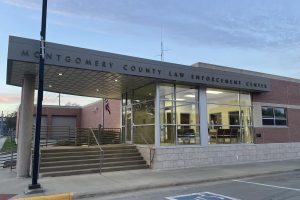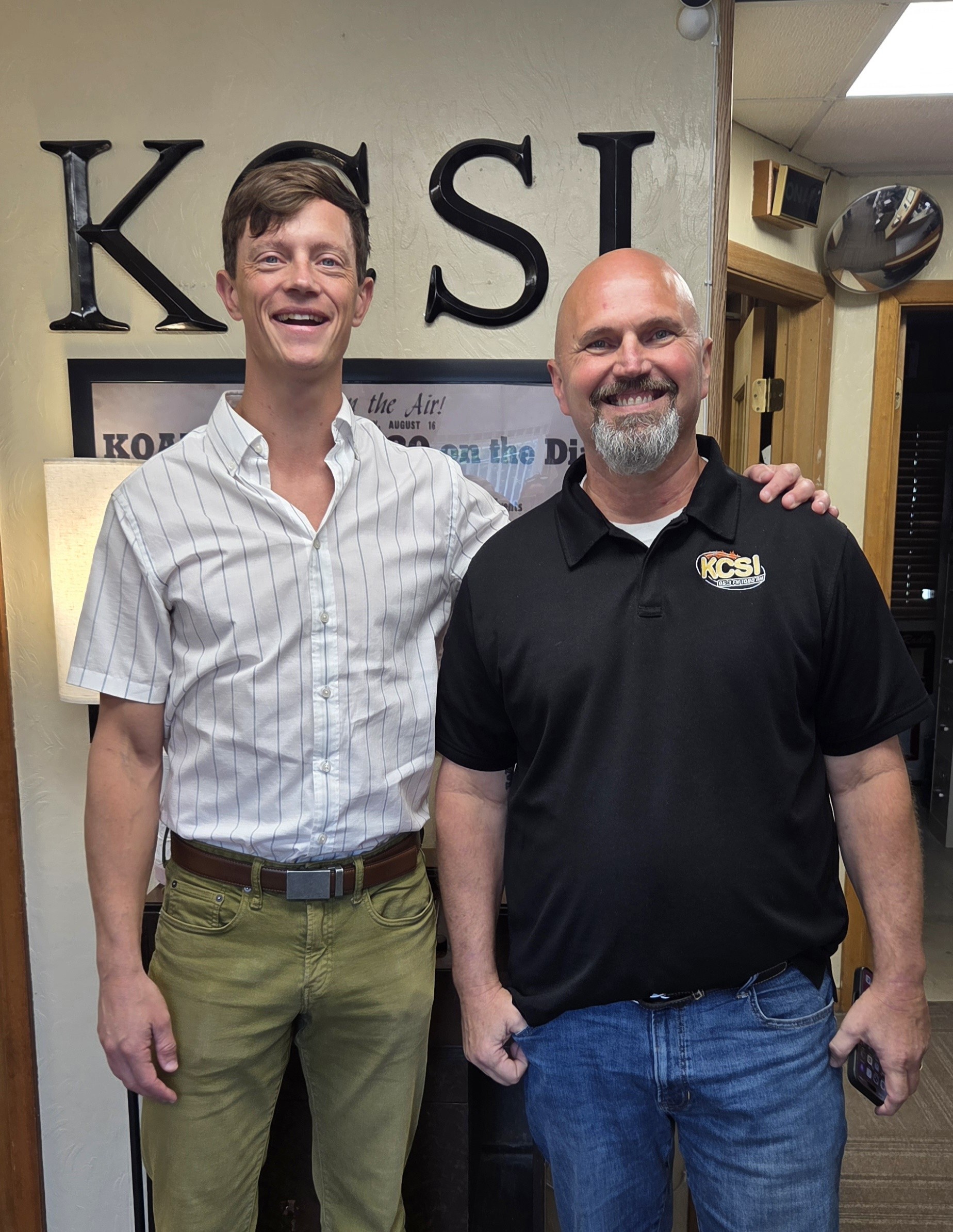
Rob Sand Visits KCSI Ahead of Montgomery County Town Hall
Democratic gubernatorial candidate and Iowa State Auditor Rob Sand stopped by the KCSI studio Thursday morning before heading to his Montgomery County town hall. Sand is roughly 60 stops into his 100 Town Hall Tour of every Iowa county and used the interview to discuss what he is hearing from residents across the state and outline several of his key proposals.
Sand described the format of his town halls as deliberately bipartisan. Attendees raise their hands to identify their political affiliation and are asked to applaud neighbors from other parties. The group then sings the first verse of “America the Beautiful” together—“right wing, left wing, one bird,” as Sand put it. When the question-and-answer period begins, he hands the microphone first to someone who identified as a Republican. “I really mean it when I say that we need to be working together and thinking together,” Sand said. “When you do that, we get to better outcomes than if all the people making the decision think the same way.”
The most common questions he receives focus on education, water quality and cancer rates, and the high costs facing Iowa families.
Cancer Rates and Water Quality
On cancer rates, Sand and host Aaron discussed Iowa’s elevated and rising numbers. Sand noted that while radon has always been present in Iowa soil, modern home construction—better insulation and finished basements people actually live in—has increased indoor exposure. He also pointed to nitrates from farm chemicals as a clear contributor to cancer risk. “There’s no doubt that nitrates cause cancer,” he said.
Sand’s proposed response centers on practical, achievable steps. He opposes giving chemical companies legal immunity. He wants full funding for conservation programs so farmers who sign up are no longer turned away for lack of money. The two largest-impact actions he is pushing are expanded grazing land and wetlands restoration through a reverse-auction process in which landowners submit the lowest price they will accept for wet spots. Those offers would then be matched against maps of the most effective locations for water quality improvement. Sand called wetlands “God’s way” of cleaning water and noted the dual benefit of creating more outdoor recreation opportunities in a state ranked 49th in public land. He also reminded listeners that 63 percent of Iowans voted in 2010 for the Iowa Water and Land Legacy sales-tax measure to fund water quality and outdoor recreation, yet the fund has never been implemented.
Education Funding and Property Taxes
Turning to education funding, property taxes, and the state budget, Sand offered several specific ideas. He said data centers should pay full taxes, including sales tax on the large amounts of electricity they consume. He supports giving local school boards more flexibility to move money across restricted funding “silos” rather than having Des Moines dictate spending categories. He also favors restoring an income limit on private-school vouchers, arguing that the majority of current payments go to high-income families who would already pay private tuition without taxpayer help. Those changes, he said, would free up resources for public schools without simply raising taxes.
Rural Population and Economic Development
On rural population decline—Montgomery County has dropped from a peak of about 17,000 people in 1917 to roughly 10,000, and Red Oak from about 6,700 in the mid-1980s to around 5,400—Sand pointed to three main drivers of out-migration: the desire for big-city life (which he said cannot be controlled), limited outdoor recreation opportunities, and the political climate after a decade of one-party control. His solutions include allowing more state jobs to be based outside Des Moines, shifting
economic-development dollars from large corporate incentives toward community-improvement grants similar to the old Vision Iowa program, and restoring divided government so that legislation requires bipartisan support.
Political Reform
Sand closed the interview by emphasizing the political reforms he has made central to his campaign. Those include term limits, age limits, cognitive and civics tests for candidates, mandatory open public town halls for elected officials, and ending the system that requires voters to join a private political party to participate in taxpayer-funded primaries. “I want to take that line [from the Lord’s Prayer] and apply it to politicians,” he said. “Make it hard for them to go do anything that they shouldn’t do.”
The conversation remained cordial throughout. Host Aaron noted that the two hold deep differences on some issues while acknowledging that Sand “makes a lot of sense on a lot of issues.” Both expressed interest in a longer discussion in the future. Sand then left the studio to continue his tour with the Montgomery County town hall.