
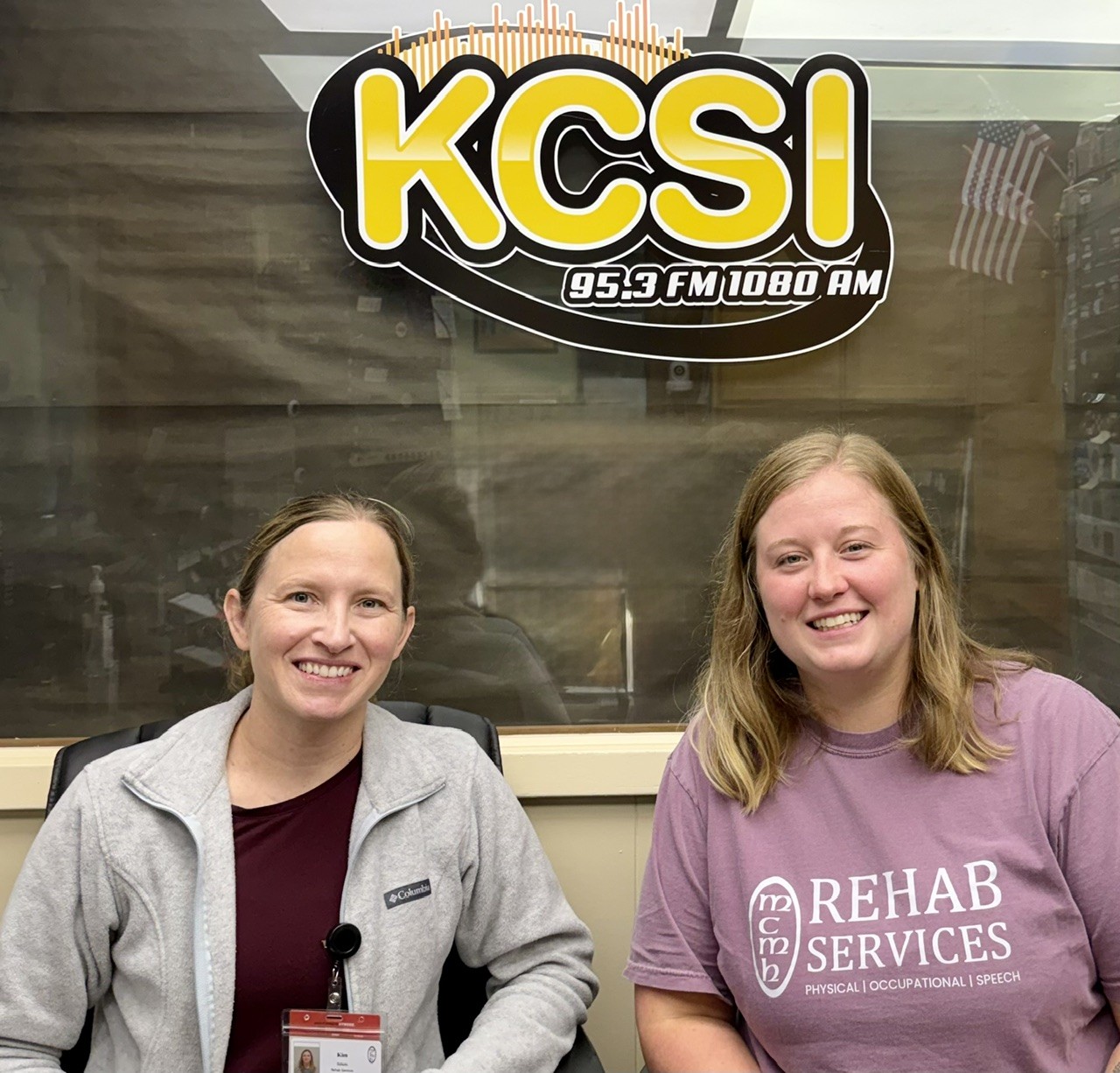
Fall-prevention and independence advice from MCMH therapists Kim Roberts and Blake Friday
What “occupation” actually means
Friday spends a lot of her week on a misconception. People hear occupational therapy and assume the subject is a job opening.
Daily jobs, as she uses the phrase, are the ones that keep a life together: dressing, cooking, laundry, parenting, hobbies, and the tasks a person still has to do at work. Shoulder surgery is part of that list. So is getting out of a chair without a family member on each elbow.
Roberts said the two licenses overlap more than most people think. Physical therapy tends to take the lower body, walking, and balance. Neck-and-shoulder problems often land with PT. Shoulder, elbow, and hand problems more often land with OT. Both will treat a shoulder. The difference is emphasis, not a wall.
Aging safely at home — before the fall
Friday’s first goal is not a perfect score on a clinic test. It is the house.
That work includes fall prevention, but not only balance drills. An occupational therapist looks at the person, the rooms they live in, and the thing they are trying to do. Friday named the changes families can make before anyone hits the floor: pull the trip hazards, add light, put in grab bars and handrails, raise the height of the chair or toilet so standing up is not a lunge. There is also equipment that makes cooking, laundry, and bathing less of a high-wire act.
The point, she said, is to get there early. If a parent has started holding the wall in the hallway, has already fallen, or came out of an illness weaker than they went in, that is the moment — not the week after a fracture.
Most of her patients still come to the outpatient clinic on the Red Oak campus. The team can simulate a kitchen or a bathroom there, then write the plan. They also go into homes when the house itself is the problem. Strength, endurance, and balance are part of the visit. So is judgment: sequencing one task after another, and walking through a room full of distractions without catching a toe.
After 50, muscle leaves unless you argue with it
Roberts did not dress aging up. Getting older is inevitable. What is not inevitable is giving the next decade away.
The number she put on the table is the one listeners remember. After 50, the body can lose 1 to 2 percent of its muscle mass each year. Starting from a weak baseline, that adds up. The other half of the sentence matters more: strength can still be built in the 50s, 60s, and 70s if the work is real resistance, not only a stroll past the mailbox.
Her homework list is the kind a person can do without a membership.
• If you have been sitting an hour, stand up and walk.
• Walk laps in the house or go around the block.
• Stand up and sit down from a chair 10 times.
• Add resistance a couple of days a week.
• Add balance work about three days a week.
• Keep some aerobic time in the week — a walk, a trail, a community fitness center in Red Oak or the towns around it.
A desk job, she said, is not automatically easier on a body than a factory job. Joints that never get loaded still fail. Build up if you have been idle. Do not pretend you are 25. Do not use that as a reason to stop.
How to start
Both therapists said the same path. Therapy at MCMH needs a physician order. Insurance is usually why. Tell a primary care provider the plain version: balance is off, an arm hurts, a leg hurts, last weekend got away from you. If therapy is appropriate, the referral comes next.
From there, Roberts said, call and ask for Michelle. She runs the schedule.
Rehab services — physical therapy, occupational therapy, and speech-language pathology — are on the main campus at 2301 Eastern Avenue in Red Oak. Appointments: (712) 623-7163. More at mcmh.org.
October is Physical Therapy Month. The homework does not have to wait for a calendar. Stand up. Walk the block. Take two trips with the leaves




Leave a Reply
Your email is safe with us.