
Catching lung cancer early — and help to quit
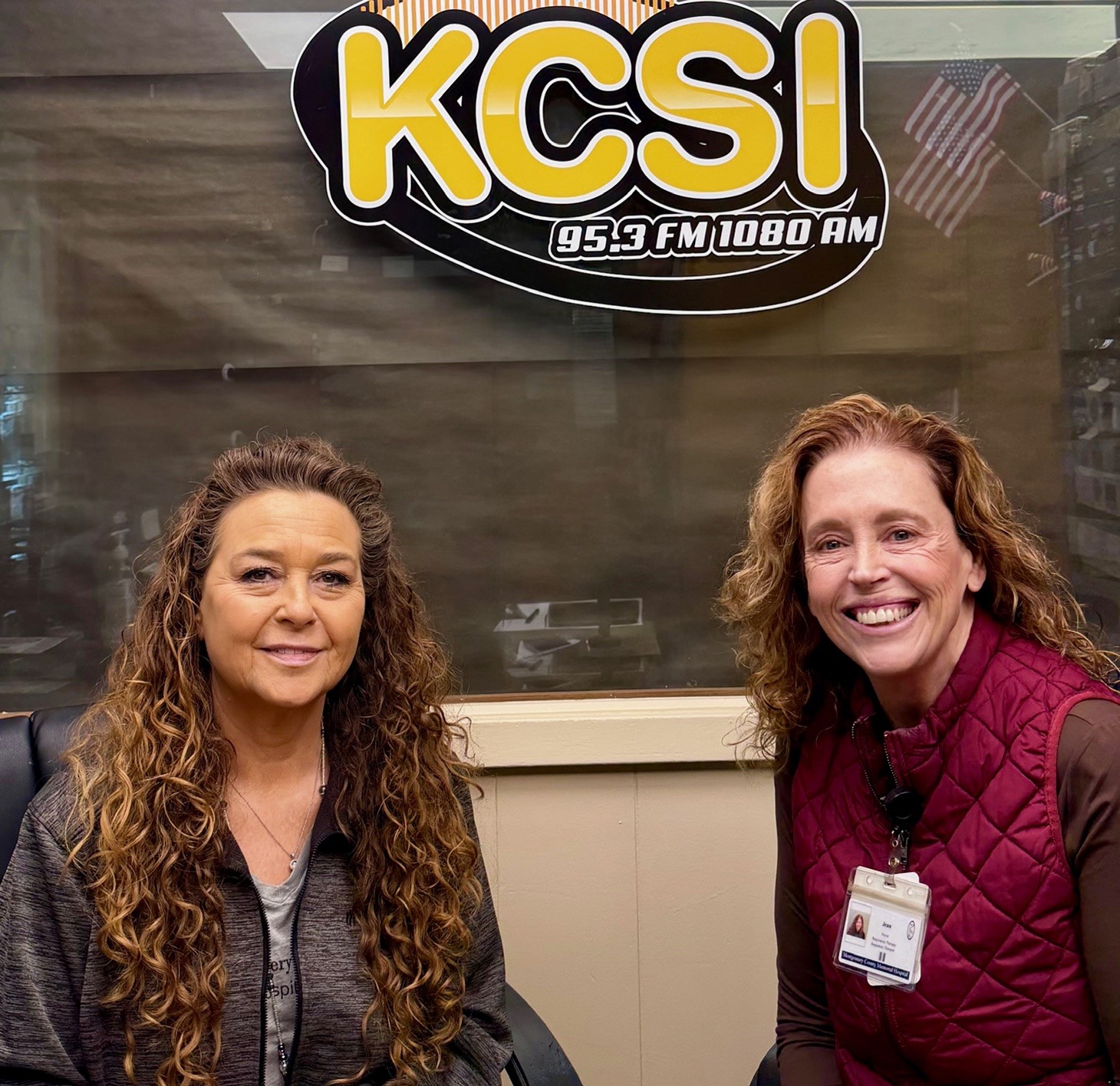
November is Lung Cancer Awareness Month. On a recent KCSI visit, Karen Stirek, Director of Imaging, and Jean Noyes, Respiratory Therapist at Montgomery County Memorial Hospital + Clinics, explained how a low-dose CT scan can find problems before symptoms appear, and how local help is available for anyone who wants to quit nicotine.
What a low-dose CT does
A low-dose CT (LDCT) is a quick chest scan that uses a reduced-radiation protocol to look for abnormalities that may be cancer. The scan takes only a couple of minutes. MCMH has offered the screening for years and was the first facility in the area to set it up.
The scan is meant to be annual for people who continue to qualify. “They’re called annual forever,” Stirek said, “unless you quit smoking and you get beyond that 15-year range, or you age out.”
Who qualifies
Insurance criteria are specific. Most commercial plans cover ages 50 to 80. Medicare covers ages 50 to 77. You need at least 20 pack-years of cigarette smoking — one pack a day for 20 years, half a pack a day for 40 years, or the equivalent. The threshold used to be 30 pack-years; it was lowered because the benefit is greater with the wider net. You must be a current smoker or have quit less than 15 years ago. You must be asymptomatic — no current signs or symptoms of lung cancer. If symptoms are already present, diagnostic testing is used instead of screening. A counseling and shared decision-making visit with your provider about quitting is required before the first scan.
Radon is the second leading cause of lung cancer, and Iowa has some of the highest levels in the country, but the insurance criteria do not include radon exposure. Self-pay scans are possible outside the covered criteria.
How to get the scan
Start with your primary care provider. The clinic completes paperwork and confirms you meet the criteria, then sends the order to imaging. Imaging verifies insurance and calls to schedule. “You have to go through your primary care,” Stirek said. “There’s some paperwork they have to do… so that we make sure that you meet that criteria. And then they will send it off to us. We’ll send it through the insurance and call you and set an appointment.”
If you have a smoking history and have not been asked about the scan, ask your provider. “I think sometimes people forget, because they might not be current smokers, that this is available to them also,” Noyes said. “The best treatment is finding it early.”
Nicotine cessation help
Cigarette smoking has declined, but nicotine use has not disappeared. Pouches and vaping have filled the gap. Iowa youth nicotine-vaping rates have run slightly above the national average. Vaping was marketed as less harmful, but evidence is still limited because the products are relatively new. Jean Noyes, who has personal experience with vaping, noted that the addiction can feel the same even when the product looks different. She has seen serious vaping-related lung injury at the hospital, including a fatal case. Vaping can aggravate asthma more than cigarettes for some people, and products can contain heavy metals and other substances. A rare condition known as popcorn lung has also been linked to vaping.
MCMH offers free help through the Freedom From Smoking program. Educator Tina Alder works with people individually rather than only in large group classes, so schedules can be matched. The program uses course materials and videos. For younger people, texting services such as Quit Now and social-media coaching videos can be more effective. “If anybody is ready to quit, we are ready to help them,” Noyes said. “We are there to help them.”
Quitting helps. Lungs begin to repair once smoking stops. Pulmonary function testing is available at MCMH and can give a clearer picture of current lung health alongside the low-dose CT.
How to start
• Ask your primary care provider about low-dose CT lung screening if you are 50–80 (or 50–77 on Medicare), have a 20 pack-year cigarette history, and quit less than 15 years ago or still smoke.
• For nicotine cessation help, call the respiratory department at (712) 623-8446 or call the main hospital at (712) 623-7000 and ask for respiratory. The Freedom From Smoking program is free.
• Quit Now is a free texting service with coaches that can be found by searching “Quit Now.”
For more information, visit mcmh.org or call (712) 623-7000.


Leave a Reply
Your email is safe with us.